Pray for America!

May 4, 2016

national-day-of-prayer

America’s National Day of Prayer, Thursday, May 5, 2016

The National Day of Prayer is an annual observance held on the first Thursday of May, inviting people of all faiths to pray for the nation. It was created in 1952 by a joint resolution of the United States Congress, and signed into law by President Harry S. Truman. Our Task Force is a privately funded organization whose purpose is to encourage participation on the National Day of Prayer. It exists to communicate with every individual the need for personal repentance and prayer, to create appropriate materials, and to mobilize the Christian community to intercede for America’s leaders and its families. The Task Force represents a Judeo-Christian expression of the national observance, based on our understanding that this country was birthed in prayer and in reverence for the God of the Bible.

For more information visit http://www.nationaldayofprayer.org

diers_bow_their_heads_in_prayer_at_the_conclusion_of_a_naturalization_ceremony_held_aboard_the_Nimitz-class_aircraft_carrier_USS_George_Washington_(CVN_73)

Happy 123rd Birthday Chiefs!

April 1, 2016

untitled

From Office of the Master Chief Petty Officer of the Navy Public Affairs

WASHINGTON (NNS) — A message from the Master Chief Petty Officer of the Navy.

Chief Petty Officers,

As I reflect back on my service as a Chief Petty Officer, I am reminded of the exceptional leadership you have demonstrated time and time again. Together we have witnessed many changes ranging from the total integration of the force, to CPO 365.

These changes, and many more, were done in an effort to ensure we provide everyone with a fair and equal opportunity to be successful, and to better enhance our naval force as a whole.

Although change comes with a level of uncertainty, it is necessary in order to remain relevant. Chief Petty Officers have embraced and owned these changes, ensuring our Sailors are led with the highest level of excellence.

As we celebrate 123 years of the Chief Petty Officer, it is not lost upon me the endless sacrifices you and your families make every day in leading, mentoring, and training Sailors under your charge.

I once read that legacy is the lantern that lights the path for others to follow, and I have no doubt that the path you lit will shine brightly for generations to come.

Very respectfully,

MIKE STEVENS

Inherent Resolve Update

March 31, 2016

55baf05dcf371_image

“Brussels Attacks Heighten Need to Defeat ISIL”

By Terri Moon Cronk

DoD News, Defense Media Activity

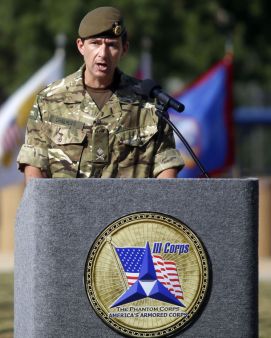
WASHINGTON, March 31, 2016 — The cowardly terror attacks the Islamic State of Iraq and the Levant claims it leveled on Brussels, Belgium, earlier this month highlight the critical need to defeat the extremists, the strategy and sustainment deputy commander of Combined Joint Task Force Operation Inherent Resolve said today.

In a weekly update on counter-ISIL operations in Iraq and Syria, British Army Maj. Gen. Doug Chalmers told Pentagon reporters via teleconference from Baghdad that the mission remains steadfast in the coalition’s resolve to defeat ISIL.

“[ISIL’s] violent, extremist ideology and ambition to expand must be stopped,” he said.

The U.S.-led coalition will prevail in the tough fight, the deputy commander said, adding that achievements are visible every day as the coalition helps ground forces weaken ISIL.

Coalition Offers Diverse Capabilities

As coalition partners enhance their efforts to train, equip and advise Iraqi security forces, Iraqi police forces are training to enable the Iraqi government to hold ground as security forces liberate areas from ISIL control.

 “Leveraging the unique capabilities of the different nations of the coalition that are directly contributing to the military campaign gives us real strength as a mission of many nations in achieving these tasks,” Chalmers said.

As the Iraqi security forces prepare to isolate and retake the key Iraqi city of Mosul from ISIL control, coalition airstrikes are putting pressure on all facets of ISIL operations inside the city, including the group’s headquarters, finances, weapons manufacturing sites and propaganda sites, Chalmers said.

“We are working closely with the Iraqi security forces to identify opportunities,” he said, citing specialized training, river crossings with mobile bridges, police training, logistics support and the provision of fire support as examples of that cooperation.

ISIL Movement Restricted

Synchronized ground operations in Iraq and Syria make it harder for ISIL to move freely and resupply its reinforcements, the deputy commander said.

“We firmly believe the momentum is now on our side, and we will do all that we can to enhance counter-[ISIL] operations where we can,” Chalmers added. “The resolve of the coalition continues to grow as we all share the same objective of defeating [ISIL] in Iraq and Syria.”

(Follow Terri Moon Cronk on Twitter: @MoonCronkDoD)

March 21, 2016

160319-M-EB647-075D

Iwo Jima Honor

Former Army Air Corps Capt. Jerry Yellin, left, Navy Seabee Jack Lazere, center left, and Marine Carl DeHaven, veterans of the Battle of Iwo Jima, accept a wreath from a member of the Young Marines group during the 71st Reunion of Honor Ceremony at Iwo To, Japan, March 19, 2016. The ceremony gathers surviving veterans, their families and active duty service members of both nations to reflect on 71 years of peace and prosperity between the U.S. and Japan alliance.

Marine Corps photo by Cpl. Robert Williams Jr.

On This Day In American History…

March 17, 2016

March 17, 1776: British forces under the command of Gen. Sir William Howe begin evacuating Boston after Howe reluctantly concludes that the American artillery positions atop Boston’s commanding Dorchester Heights are “impregnable.”

5Feb1917ComblesFranceWWI

We are with you and we morn your great loss…

November 13, 2015

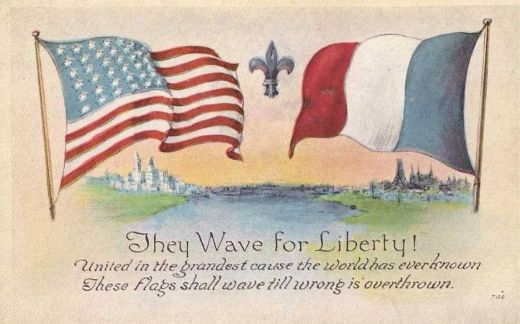
WWI-American-French-Flags

120 Dead in Paris attacks, Worst since WWII

By LORI HINNANT and GREG KELLER

PARIS (AP) — A series of attacks targeting young concert-goers, soccer fans and Parisians enjoying a Friday night out at popular nightspots killed at least 120 people in the deadliest violence to strike France since World War II. President Francois Hollande condemned it as terrorism and pledged that France would stand firm against its foes.

The worst carnage was at a concert hall hosting an American rock band, where scores of people were held hostage and attackers ended the standoff by detonating explosive belts. Police who stormed the building encountered a bloody scene of horror inside.

Paris Prosecutor Francois Molins said as many as five attackers were killed, though it was not clear how many there were altogether and how many, if any, were still at large. Other officials said seven attackers had been killed and that police were searching for other possible accomplices.

Authorities said the death toll could exceed 120 for at least six sites, including the national stadium and a tight circle of popular nightspots.

Hollande declared a state of emergency and announced that he was closing the country’s borders, although officials later said they were just re-imposing border checks that had been removed after Europe created its free-travel zone in the 1980s.

Metro lines shut down and streets emptied on the mild fall evening as fear spread through the city, still aching from the horrors of the Charlie Hebdo attack just 10 months ago.

The attack unfolded with two suicide bombings and an explosion outside the national stadium during a soccer match between the French and German national teams. Within minutes, according to Paris police chief Michel Cadot, another group of attackers sprayed cafes outside the concert hall with machine gunfire, then stormed inside and opened fire on the panicked audience. As police closed in, they detonated explosive belts, killing themselves.

Hollande, who had to be evacuated from the stadium when the bombs went off outside, later vowed that the nation would stand firm and united: “A determined France, a united France, a France that joins together and a France that will not allow itself to be staggered even if today, there is infinite emotion faced with this disaster, this tragedy, which is an abomination, because it is barbarism.”

There was no immediate claim of responsibility for the attacks, although jihadists on Twitter immediately praised them and criticized France’s military operations against Islamic State extremists.

In addition to the deaths at the concert hall, dozens were killed in an attack on a restaurant in the 10th arrondissement and several other establishments crowded on a Friday night, police said. Authorities said at least three people died when the bombs went off outside the soccer stadium.

All of the officials spoke on condition of anonymity because they were not authorized to be publicly named in the quickly moving investigation.

“This is a terrible ordeal that again assails us,” Hollande said in a nationally televised address. “We know where it comes from, who these criminals are, who these terrorists are.”

U.S. President Barack Obama, speaking to reporters in Washington, decried an “attack on all humanity,” calling the Paris violence an “outrageous attempt to terrorize innocent civilians” and vowing to do whatever it takes to help bring the perpetrators to justice.

Two explosions were heard outside the Stade de France stadium north of Paris during a France-Germany exhibition soccer game. A police union official, Gregory Goupil of the Alliance Police Nationale, whose region includes the area of the stadium, said there were two suicide attacks and a bombing that killed at least three people near two entrances and a McDonalds.

The blasts penetrated the sounds of cheering fans, according to an Associated Press reporter in the stadium. Sirens were immediately heard, and a helicopter was circling overhead.

France has heightened security measures ahead of a major global climate conference that starts in two weeks, out of fear of violent protests and potential terrorist attacks. Hollande canceled a planned trip to this weekend’s G-20 summit in Turkey, which was to focus in large part on growing fears of terrorism carried out by Islamic extremists.

Emilio Macchio, from Ravenna, Italy, was at Le Carillon restaurant, one of the restaurants targeted, having a beer on the sidewalk, when the shooting started. He said he didn’t see any gunmen or victims, but hid behind a corner, then ran away.

“It sounded like fireworks,” he said.

France has been on edge since January, when Islamic extremists attacked the satirical newspaper Charlie Hebdo, which had run cartoons of the Prophet Muhammad, and a kosher grocery. Twenty people died, including the three attackers. The Charlie Hebdo attackers claimed links to extremists in Yemen, while the kosher market attacker claimed ties to the Islamic State group.

This time, they targeted young people enjoying a rock concert and ordinary city residents enjoying a Friday night out.

One of the targeted restaurants, Le Carillon, is in the same general neighborhood as the Charlie Hebdo offices, as is the Bataclan, among the best-known venues in eastern Paris, near the trendy Oberkampf area known for a vibrant nightlife. The California-based band Eagles of Death Metal was scheduled to play there Friday night.

Among the first physicians to respond to the wounded Friday was Patrick Pelloux, an emergency room doctor and former Charlie Hebdo writer who was among the first to enter the offices Jan. 7 to find his friends and colleagues dead.

The country has seen several smaller-scale attacks or attempts since, including an incident on a high-speed train in August in which American travelers thwarted an attempted attack by a heavily armed man.

France’s military is bombing Islamic State targets in Syria and Iraq and fighting extremists in Africa, and extremist groups have frequently threatened France in the past.

French authorities are particularly concerned about the threat from hundreds of French Islamic radicals who have travelled to Syria and returned home with skills to stage violence.

Though it was unclear who was responsible for Friday night’s violence, the Islamic State is “clearly the name at the top of everyone’s list,” said Brian Michael Jenkins, a terrorism expert and senior adviser to the president of the Washington-based RAND Corporation.

Jenkins said the tactic used — “multiple attackers in coordinated attacks at multiple locations” — echoed recommendations published in the extremist group’s online magazine, Dabbiq, over the summer.

“The big question on everyone’s mind is, were these attackers, if they turn out to be connected to one of the groups in Syria, were they homegrown terrorists or were they returning fighters from having served” with the Islamic State group, Jenkins said. “That will be a huge question.”

___

Associated Press writers Angela Charlton, Sylvie Corbet, Jerome Pugmire, Samuel Petrequin, Jamey Keaten and John-Thor Dahlburg contributed to this story.

Coast Guard Cutter Spencer returns home to Boston after Caribbean Sea deployment

October 30, 2015

300x450_q95Chief Petty Officer John Mincey, a crew member aboard the Coast Guard Cutter Spencer, holds his daughter after the cutter returned to homeport in Boston Friday, Oct. 30, 2015, after a 65-day patrol of the Caribbean Sea. (U.S. Coast Guard photo by Petty Officer 2nd Class Cynthia Oldham)

BOSTON — Family welcomed home Coast Guard Cutter Spencer’s crew when the ship returned to its homeport in Boston, Friday at 8 a.m. after a 65-day patrol of the Caribbean Sea.

During the patrol, Spencer conducted several search and rescue cases as well as counter narcotics and migrant interdiction operations.

As part of Operation Martillo, Spencer intercepted four go-fast vessels suspected of trafficking drugs, and directly contributed to the seizure of 1,000 kilograms (2,204 pounds) of marijuana and 1,677 kilograms (3,697 pounds) of cocaine worth approximately $50 million.

Coast Guard Cutter Spencer is a 270-foot medium endurance cutter with a crew compliment of 14 officers and 86 enlisted personnel.

The media release with more details and photos from the patrol is available here: Coast Guard Cutter Spencer returns to Boston after Caribbean Sea deployment

Saving Lives and Guarding America’s Coast Since 1790.
The United States Coast Guard — Proud History. Powerful Future.

October 20, 2015

the_task

October 16, 2015

Army Veteran fights off man threatening children with knives…

AAfxLvs

In this Oct. 15, 2015 photo, James Vernon, 75, sits at his home in Morton, Ill. Vernon, an army veteran, is recovering from injuries suffered when he fought off a knife-wielding man who threatened children at a central Illinois library. (Robert Downen / Pekin Daily Times, via AP)

MORTON, Ill. — A 75-year-old Army veteran who fought off a knife-wielding man who was threatening to kill children at an Illinois library says training he received nearly five decades ago helped him in the scuffle.

James Vernon was teaching a chess class with 16 children at Morton Public Library when authorities say 19-year-old Dustin Brown entered the room with two knives. According to a court affidavit, Brown told police afterward that he “failed in his mission to kill everyone.”

“He actually ran into the room yelling, ‘I’m going to kill some people!’ He was holding two knives,” Vernon told the Pekin Daily News. Vernon described the knives as “hunting types” with “fixed blades about 5 inches” long.

Vernon, a retired Caterpillar Inc. employee, told the newspaper he remembered the knife-fight training the Army had given him. Despite his cuts, Vernon contended he won his “90 seconds of combat” with Brown, “but I felt like I lost the war.” He suffered two cut arteries and a tendon in his left hand as he blocked Brown’s knife swipe.

He said he first tried to calm Brown and deflect his attention from the children attending his class.

“I tried to talk to him. I tried to settle him down,” he said. “I didn’t, but I did deflect his attention” from the children “and calmed him a bit. I asked him if he was from Morton, did he go to high school. I asked what his problem was. He said his life sucks.”

Vernon said the man backed away as he got closer to him, but he was able to put himself between Brown and the room’s door, with the children hiding under the tables behind him.

“I gave them the cue to get the heck out of there, and, boy, they did that!” Vernon said. “Quick, like rabbits.”

Vernon said Brown responded by slashing him with a knife.

Vernon, saying he was “bleeding pretty good” at the time, held the suspect until a library employee arrived to remove the knives, and kept the man pinned until police officers and paramedics arrived.

Brown, who was free on child pornography charges, is being held on $800,000 bond on charges of attempted murder, armed violence and aggravated battery. It wasn’t immediately known whether Brown has a lawyer who could comment on his behalf.

October 15, 2015

Obama Announces Halt of U.S. Troop Withdrawal   in Afghanistan

AAftlr7

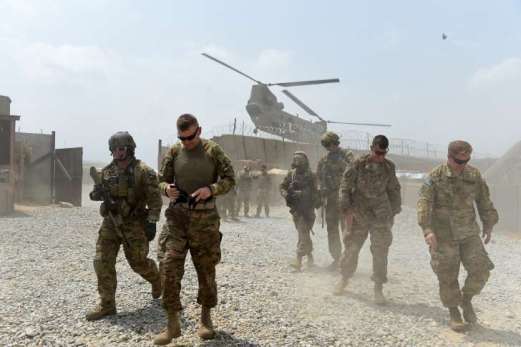
By MATTHEW ROSENBERG and MICHAEL D. SHEAR the New York Times. American Army soldiers at a base in the Khogyani district of Afghanistan in August. © Getty Images

WASHINGTON — The United States will halt its military withdrawal from Afghanistan and instead keep thousands of troops in the country through the end of his term in 2017, President Obama announced on Thursday, prolonging the American role in a war that has now stretched on for 14 years.

In a brief statement from the Roosevelt Room in the White House, Mr. Obama said he did not support the idea of “endless war” but was convinced that a prolonged American presence in Afghanistan was vital to that country’s future and to the national security of the United States.

“While America’s combat mission may be over, our commitment to Afghanistan and its people continues,” said Mr. Obama, flanked by Vice President Joseph R. Biden Jr. and his top military leaders. “I will not allow Afghanistan to be used as safe havens to attack America again.”

The current American force in Afghanistan of 9,800 troops will remain in place through most of 2016 under the administration’s revised plans, before dropping to about 5,500 at the end of next year or in early 2017, Mr. Obama said. He called it a “modest but meaningful expansion of our presence” in that country.

The president, who has long sought to end America’s two wars before he leaves office, said he was not disappointed by the decision. He said the administration had always understood the potential for adjustments in troop levels even as the miltary sought to withdraw troops from battle.

But the announcement underscores the difficulty Mr. Obama has had in achieving one of the central promises of his presidency in both Afghanistan and Iraq. Mr. Obama conceded that despite more than a decade of fighting and training, Afghan forces are not fully up to the task of protecting their country.

The Taliban are now spread through more parts of the country than at any point since 2001, according to the United Nations, and last month they scored their biggest victory of the war, seizing the northern city of Kunduz and holding it for more than two weeks before pulling back on Tuesday.

Mr. Obama noted the dangers, saying, “In key areas of the country, the security situation is still very fragile, and in some areas, there is risk of deterioration.” After 2017, he said, American forces will remain in several bases in the country to “give us the presence and the reach our forces require to achieve our mission.”

He did not specifically mention Iraq, where a full troop withdrawal has been followed by a surge in violence from the Islamic State. But he said the mission in Afghanistan had the benefit of a clear objective, a supportive government and legal agreements that protect American forces — three factors not present in Iraq.

“Every single day, Afghan forces are fighting and dying to protect their country. They are not asking us to do it for them,” Mr. Obama said. “If they were to fail, it would endanger the security of us all.”

Some of the troops will continue to train and advise Afghan forces, while others will carry on the search for Qaeda fighters and militants from the Islamic State and other groups who have found a haven in Afghanistan, he said.

Even before Kunduz fell to the Taliban, the administration had been under growing pressure from the military and others in Washington, including Congress, to abandon plans that would have cut by about half the number of troops in Afghanistan next year, and then drop the American force to about 1,000 troops based only at the embassy in Kabul by the start of 2017.

Now, instead of falling back to the American Embassy — a heavily fortified compound in the center of Kabul — Mr. Obama said that the military would be able to maintain its operations at Bagram Air Field to the north of Kabul, the main American hub in Afghanistan, and at bases outside Kandahar in the country’s south and Jalalabad in the east.

All three bases are crucial for counterterrorism operations and for flying drones that are used by the military and the C.I.A., which had also argued for keeping troops in Afghanistan to help protect its own assets.

There was no set date for the military to decrease the number of troops in Afghanistan to 5,500. The pace of that troop reduction would be determined largely by commanders on the ground, and the timing would also most likely provide flexibility to whoever succeeds Mr. Obama.

President Ashraf Ghani of Afghanistan had also pressed for Mr. Obama to keep more troops, and many in Washington who have worked closely with the Afghans over the past several years were loath for the United States to pull back just when it had an Afghan leader who has proved to be a willing partner, unlike his predecessor, Hamid Karzai.

Mr. Ghani is acutely aware of his country’s need for help from the United States and its NATO allies. The American military has repeatedly stepped in this year to aid Afghan forces battling the Taliban, launching airstrikes and at times sending Special Operations troops to join the fight, despite Mr. Obama’s declaration that the American war in Afghanistan had ended.

But the recent fighting in Kunduz also exposed the limits of foreign forces now in Afghanistan, which total 17,000, including American and NATO troops. It took only a few hundred Taliban members to chase thousands of Afghan soldiers and police officers from Kunduz, and the Afghans struggled to take back the city even with help from American airstrikes and Special Operations forces.

During the fighting, an American AC-130 gunship badly damaged a hospital run by Doctors Without Borders, killing at least 22 patients and staff members — and not a single insurgent.

Mr. Obama apologized for the attack, which may have violated guidelines laid down by the administration for the use of force by the military after the American combat mission ended last year. Under the rules, airstrikes are authorized to kill terrorists, protect American troops and help Afghans who request support in battles — like those in Kunduz, recently taken over by the Taliban — that can change the military landscape.

The idea behind the guidelines was to give troops leeway and to keep Americans out of daily, open-ended combat. But how much latitude Mr. Obama would allow the military moving forward was unclear.

It is not the first time the administration has revised the withdrawal plans. During Mr. Ghani’s visit in March, Mr. Obama announced that the United States would keep 9,800 troops in Afghanistan through 2015, instead of cutting the force in half, as had been originally planned. At the time, the White House still maintained that almost all the troops would be pulled out by 2017.

But with the situation in Afghanistan continuing to deteriorate, the military presented the administration with new options this summer. The plan that has been decided on for 2017 and beyond hewed closely to a proposal made by Gen. Martin E. Dempsey, then the chairman of the Joint Chiefs of Staff.

Mr. Obama said that 5,500 troops, along with contributions from NATO allies, which have yet to be agreed upon, would provide enough power to protect the force and continue the advisory and counterterrorism missions.

Finances were also a consideration. Keeping 5,500 troops in Afghanistan would cost about $14.6 billion a year. It would have cost about $10 billion a year to maintain the much smaller force based at the American Embassy.